Charu Gaur
Charu Gaur is the founder/editor of Runway Square. Don't ask her to meet over tea or coffee. She's currently working on her selfie game which recently went for a toss. Tips are welcome..
- 21 September 2026
- FASHION + SHOPPING
Your “Look” Is The New Interface. Fash-Tech Accessories You Should Know About

Technology has finally realised that the fastest route onto the human body is not through engineering.
It is through taste.
The great mistake in the first generation of wearable technology was assuming that people wanted to wear computers. We don’t. That’s why, today, the most interesting fashion technology isn’t necessarily arriving from fashion companies or technology companies. It is emerging in the uncomfortable territory between them. Samsung needs Gentle Monster. Meta needs Ray-Ban and Oakley. Whoop needs Samuel Ross. Ultrahuman needs Glenn Martens. TAYA needs jewellery. And the consumer gets something that is, theoretically, both useful and desirable. That last word matters more than the technology industry likes to admit. Nobody has ever wanted to be seen wearing a chipset. They want the ring. They want the glasses. They want the necklace. They want the ridiculous, beautiful object that happens to contain a computer.
The accessory, it seems, has become the industry’s favourite Trojan horse for technology. And here are a few innovations you should know about before everyone else starts talking about them.
Snap Specs: the $2,195 argument for wearing a computer on your face
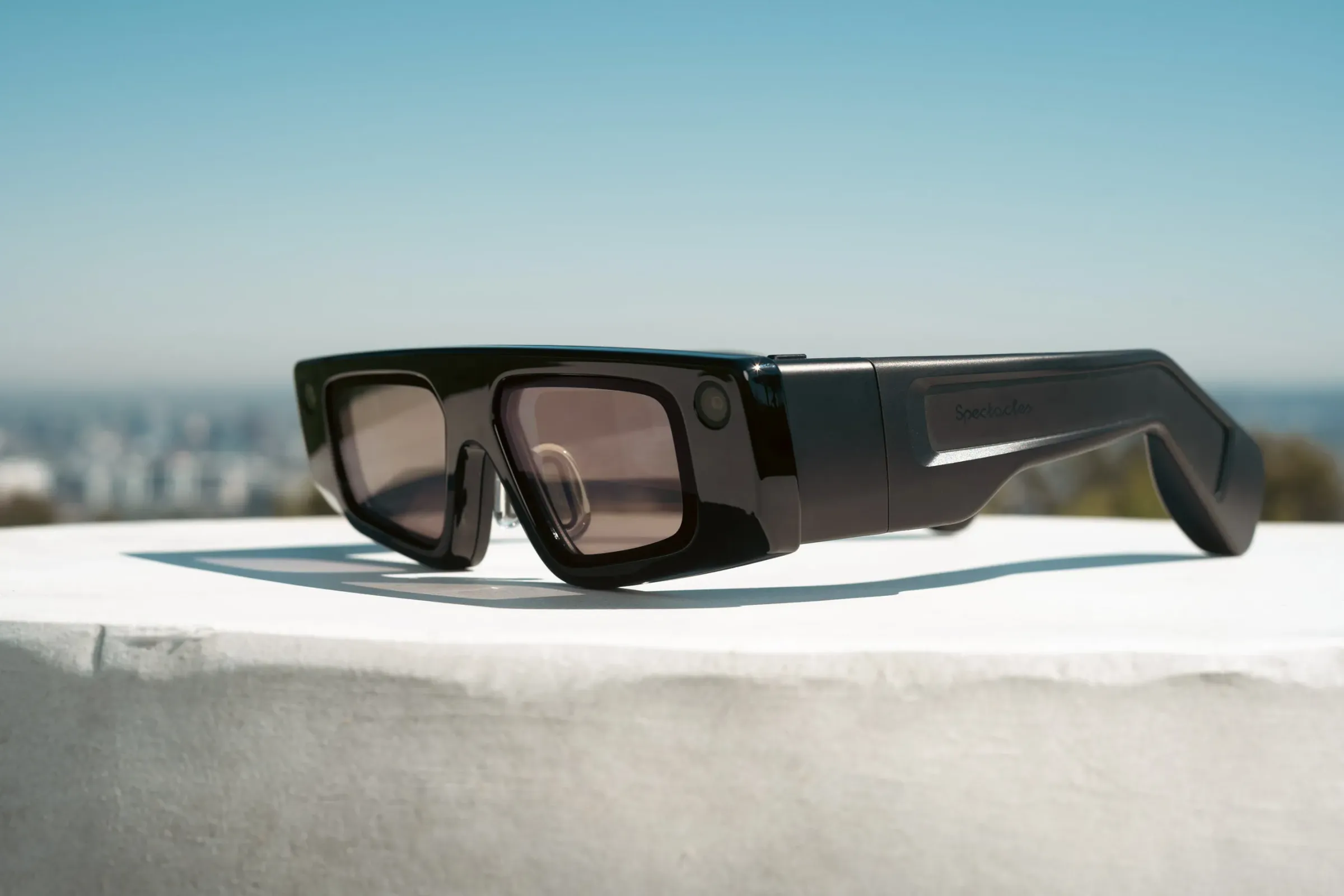
Snap’s new Specs are perhaps the most unapologetically futuristic object in this list. The company is preparing to release its AR glasses in autumn 2026, with early access beginning in Los Angeles in October. At $2,195, they are not exactly an impulse purchase made while waiting for your oat milk latte. They are also not pretending to be sunglasses with a camera attached. Specs are proper augmented-reality glasses, with displays built into the lenses and an AI assistant called Specs Intelligence designed to interact with the wearer’s digital life. Snap says the system can help with things such as work and travel information.
The interesting part is not that Snap has made AR glasses. It has been doing that for years. It is that the company is now attempting to make them into a fashion object with a computing system attached. That is a considerably more difficult proposition. The glasses reportedly have a fairly substantial frame, which means Snap is asking consumers to accept visible hardware in exchange for something a smartphone cannot quite provide: information appearing in the world rather than on a screen in your hand. Whether $2,195 is the beginning of a new category or an extremely expensive conversation starter remains to be seen. But as fashion technology goes, it is difficult to accuse Specs of being timid.
Samsung × Gentle Monster: AI gets a Seoul makeover

If Snap is taking the futuristic route, Samsung and Google are taking the luxury-eyewear route. In May, Samsung unveiled its forthcoming intelligent eyewear in collaboration with Gentle Monster and Warby Parker. That pairing is significant. Gentle Monster isn’t a technology company that has decided glasses need to look fashionable. It is one of the fashion world’s most recognisable eyewear brands, with a design language that has helped turn glasses into something closer to sculpture.
The new eyewear is designed as a companion to a smartphone, with voice interaction and AI capabilities built into a familiar eyewear format. It is a subtle but important shift in the industry’s strategy. The technology companies are no longer asking fashion to decorate their hardware. They are asking fashion to design the hardware. And that may be the difference between a wearable people demonstrate at CES and one they actually wear to dinner.
Whoop × Samuel Ross: when the fitness tracker finally gets a creative director

The most interesting fashion-tech collaboration of the year may be happening somewhere much quieter than the AI-glasses race. Whoop hired Samuel Ross, founder of A-COLD-WALL*, as its global creative director and launched Project Terrain, a collection that includes redesigned Whoop bands and technical apparel. This is clever for a reason that has nothing to do with colourways.
Whoop is designed to be worn continuously. Which means that, whether the company likes it or not, its product becomes part of your personal style. Ross’s intervention effectively acknowledges something wearable technology companies have historically been reluctant to admit: if something lives on your body 24 hours a day, it is fashion. Project Terrain includes a new SR_A-branded Strata Whoop band alongside technical clothing, including shells, shorts, base layers and a performance bra. It’s less about making fitness fashionable than making the device itself culturally legible.
The tracker has finally acquired a point of view.
Ultrahuman Ring PRO x Diesel: the smart ring gets an edge

India’s Ultrahuman is having a rather good year. Its Ring PRO, announced in February, pushes the smart-ring category towards a more serious piece of personal infrastructure, with up to 15 days of battery life and substantially expanded data storage. The company also introduced Jade, its AI system for interpreting health data across the Ultrahuman ecosystem.
But the more fashion-conscious development came through an earlier collaboration with Diesel. Designed under Glenn Martens, the Diesel Ultrahuman Ring takes the company’s Ring Air hardware and turns it into something much more recognisably fashion-oriented: distressed black or shiny silver, complete with Diesel’s Double D logo.
This may sound like branding. It is also a useful experiment. The smart ring has an obvious problem: unlike a watch, it has almost no visual interface. Its entire value is hidden. Fashion solves that by giving the object another reason to exist. You don’t wear it only because it measures sleep. You wear it because it looks good. Technology gets the data; fashion gets the desire. Everybody wins.
TAYA: finally, an AI wearable that doesn’t want to listen to everybody

The AI wearable market has developed a slightly creepy habit. Its basic proposition is often: wear this thing and let it listen to your life. The TAYA Necklace, takes the opposite approach. Created by former Apple design engineer Elena Wagenmans, is a jewellery-like AI note-taking device designed to capture your voice rather than the room around you. You tap the pendant to record and tap again to stop. Its directional microphones and voice-verification system are designed to distinguish the wearer from surrounding conversations. The recordings are then transcribed and organised through an accompanying app.
And, importantly, TAYA actually looks like jewellery. The company’s current preorder page lists a PVD-coated stainless-steel pendant with a 14K gold-plated chain, priced at $650, with shipping planned for autumn 2026. This may be one of the more important design decisions in the entire AI-hardware category. The company isn’t asking you to explain why you’re wearing an AI device. It is giving you something you might want to wear anyway. That is a very fashion-industry approach to technology.
Peripherii’s smart earrings: because apparently your ears were underutilised

Then there are smart earrings. Peripherii’s 2026 Audio Couture collection turns Bluetooth audio into jewellery, with its Priamble line using open-ear technology integrated into decorative earrings. The company describes the pieces as artisan-made in New York and designed to avoid the conspicuous “I’m wearing earbuds” aesthetic.
This is where fashion tech becomes genuinely interesting. We have spent the past decade putting technology into things we already wear. Now designers are asking which body part has been neglected. The answer, apparently, is the earlobe. And honestly, it makes sense. Jewellery already has an established relationship with the ear. Nobody finds earrings conceptually strange. Nobody asks why you have two of them. And unlike headphones, jewellery doesn’t necessarily announce itself as a piece of electronics. The earbud may have met its more glamorous cousin.
Circular Ring 3: your finger becomes your wallet
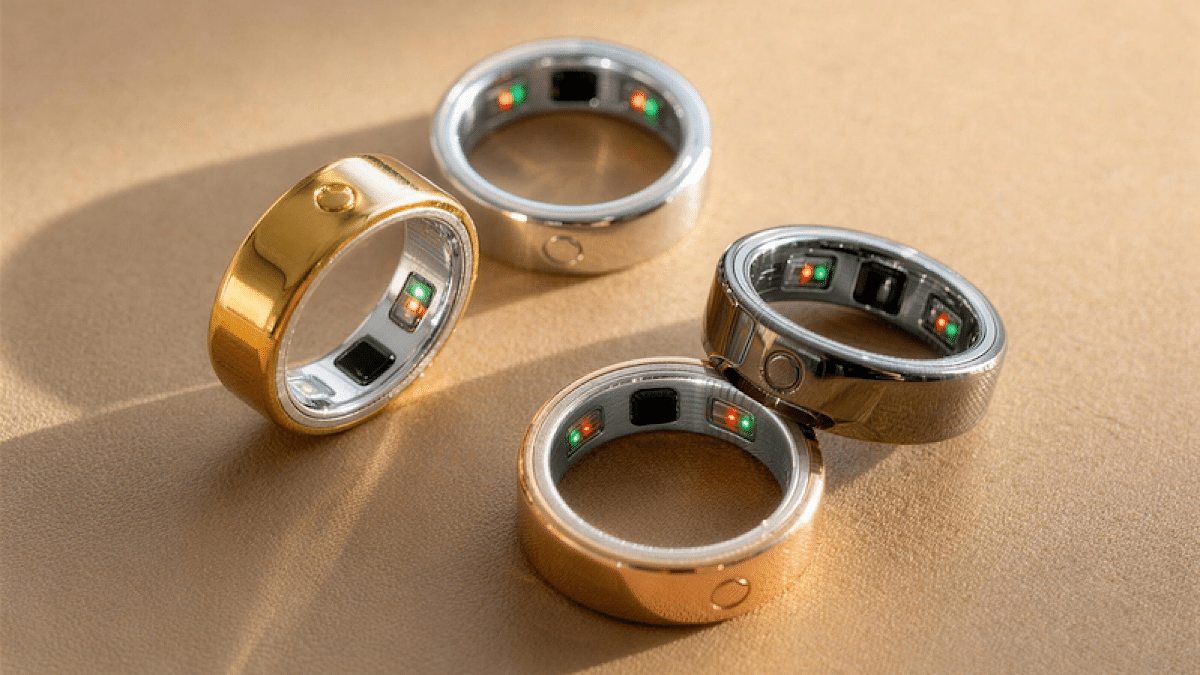
At IFA 2026, Circular unveiled its Ring 3 family, including the Ring 3 Pro and the considerably slimmer Ring 3 Slim. The interesting addition isn’t another sleep score. It’s payments. The new rings incorporate NFC contactless payments supporting Visa and Mastercard, alongside health tracking and haptic alerts. The Pro model adds features including ECG monitoring and other biometric measurements, while the Slim version is designed around a lighter form factor and longer battery life. Availability is expected in early 2027.
This is the moment smart rings start becoming genuinely interesting as accessories. A ring that tracks your sleep is a piece of health technology. A ring that tracks your sleep and pays for your coffee begins to resemble a new kind of personal object. It is no longer a miniature fitness tracker. It’s a wallet, authentication device, health monitor and jewellery object occupying roughly the same amount of real estate as a wedding band. That is an impressively crowded finger.
Chopova Lowena’s Alto bag: fashion doesn’t want technology hidden anymore

And perhaps the most revealing example isn’t a new piece of hardware at all. For SS26, Chopova Lowena partnered with Sony to reimagine its Alto bag around the WH-1000XM6 headphones, turning the headphones into part of the visual language of the accessory rather than something you remove from a bag and put on your head.
This feels particularly 2026. For years, fashion wanted technology to disappear. Chopova Lowena does the opposite. It says: what if the technology is part of the outfit? That is a much more interesting proposition than making electronics invisible. It recognises that headphones, phones, cameras and even charging cables have become part of how people dress. They are no longer merely functional objects carried alongside fashion. They are fashion objects themselves.
Meta’s new glasses: the accessory that wants to be your assistant

Meta is making the same bet, but with a different advantage: it already knows what consumers think of its glasses. Its latest Meta Glasses, developed with EssilorLuxottica, launched in 2026 in 26 styles and are compatible with prescription lenses. They use Meta AI and the company’s newer Muse Spark model, with features including visual understanding, photography, translation and hands-free assistance. Meanwhile, the Ray-Ban Meta Gen 2 and Oakley Meta ranges are pushing the category in two different aesthetic directions. Ray-Ban makes the technology look like Ray-Ban. Oakley makes it look like Oakley. And Kylie makes it what Kylie does.
This sounds obvious. It is actually the entire business model. Meta doesn’t need people to fall in love with a gadget. It needs them to forget they’re wearing one. And that’s probably not always a good thing. And That’s a story for another time. Having said that, the interesting fashion question is therefore no longer whether smart glasses will become fashionable. It is whether consumers will eventually have the same relationship with them that they have with sunglasses: multiple pairs, different aesthetics, different social contexts. Imagine choosing your AI according to your outfit.
That sounds ridiculous.
Give it two years.

Charu Gaur is the founder/editor of Runway Square. Don’t ask her to meet over tea or coffee. She’s currently working on her selfie game which recently went for a toss. Tips are welcome.